
Recent Workshops and Events
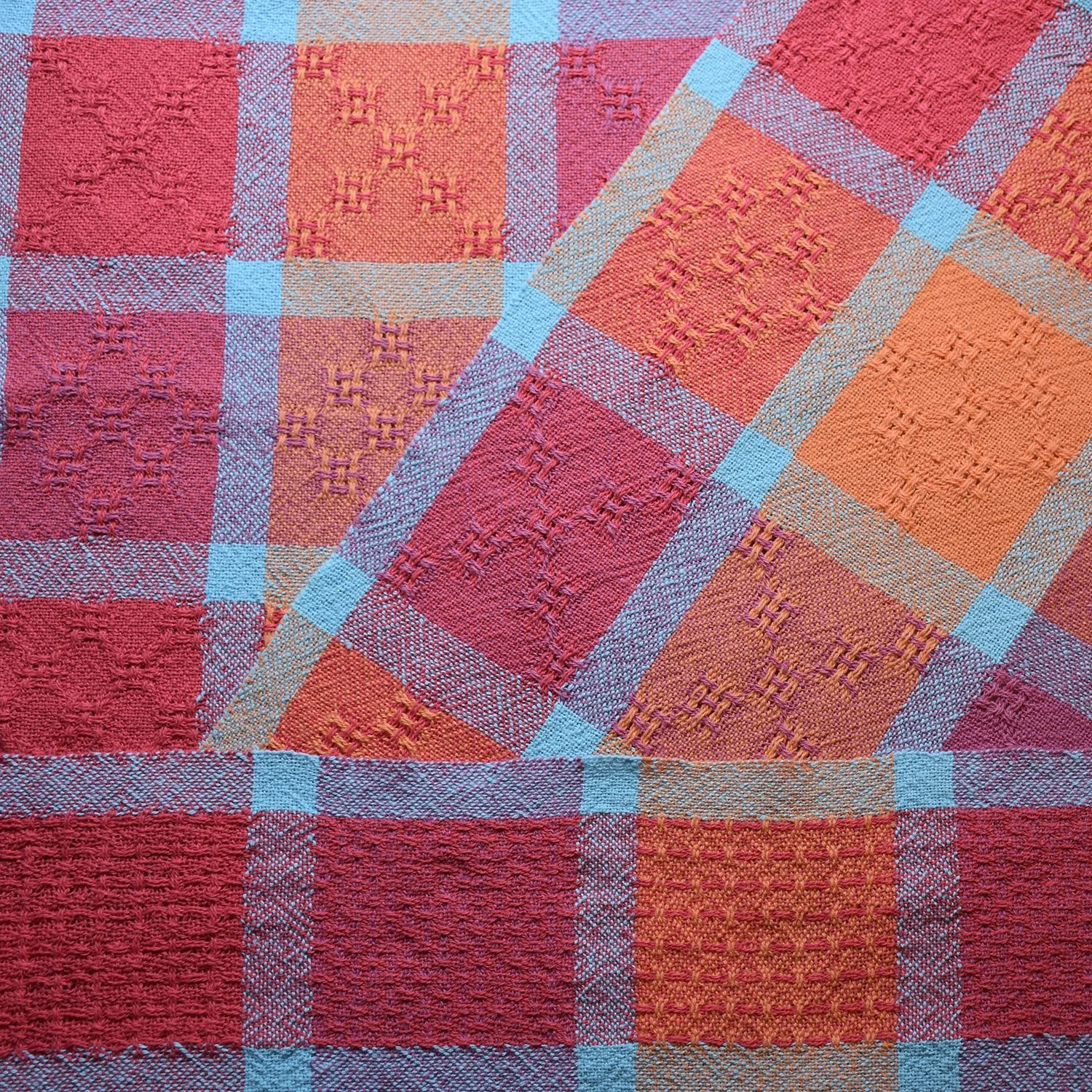

Participants will use printed Design Pages, Transparent Overlays, and a Huck Lace Template from Neilson’s book … An Exaltation of Blocks … to explore thousands of design possibilities for 6-block Huck Lace. The Towel Project will consist of three 4 ½” sections of Huck Lace, each a different color, separated by a one-inch stripe of plain weave. The overall width of the project is 16 ¼” suitable for looms 18” wide or wider.

Slides document my work from the earliest overshot pieces woven on a rented floor loom to my current studies in Kumihimo, Block Design, and Rep Weave. Teaching others has become one of the biggest rewards for me as to Why We Weave.


The workshop in warp-faced rep introduces weavers to the concept of block design, where two shafts control the color of each block or threading unit. Weavers will design their own color schemes for pattern and background colors and thread their looms from suggested drafts sent prior to the workshop. Weavers will learn how to interpret the profile treadling plans to determine which shafts to raise for the thick weft and thin pick tie-down wefts.

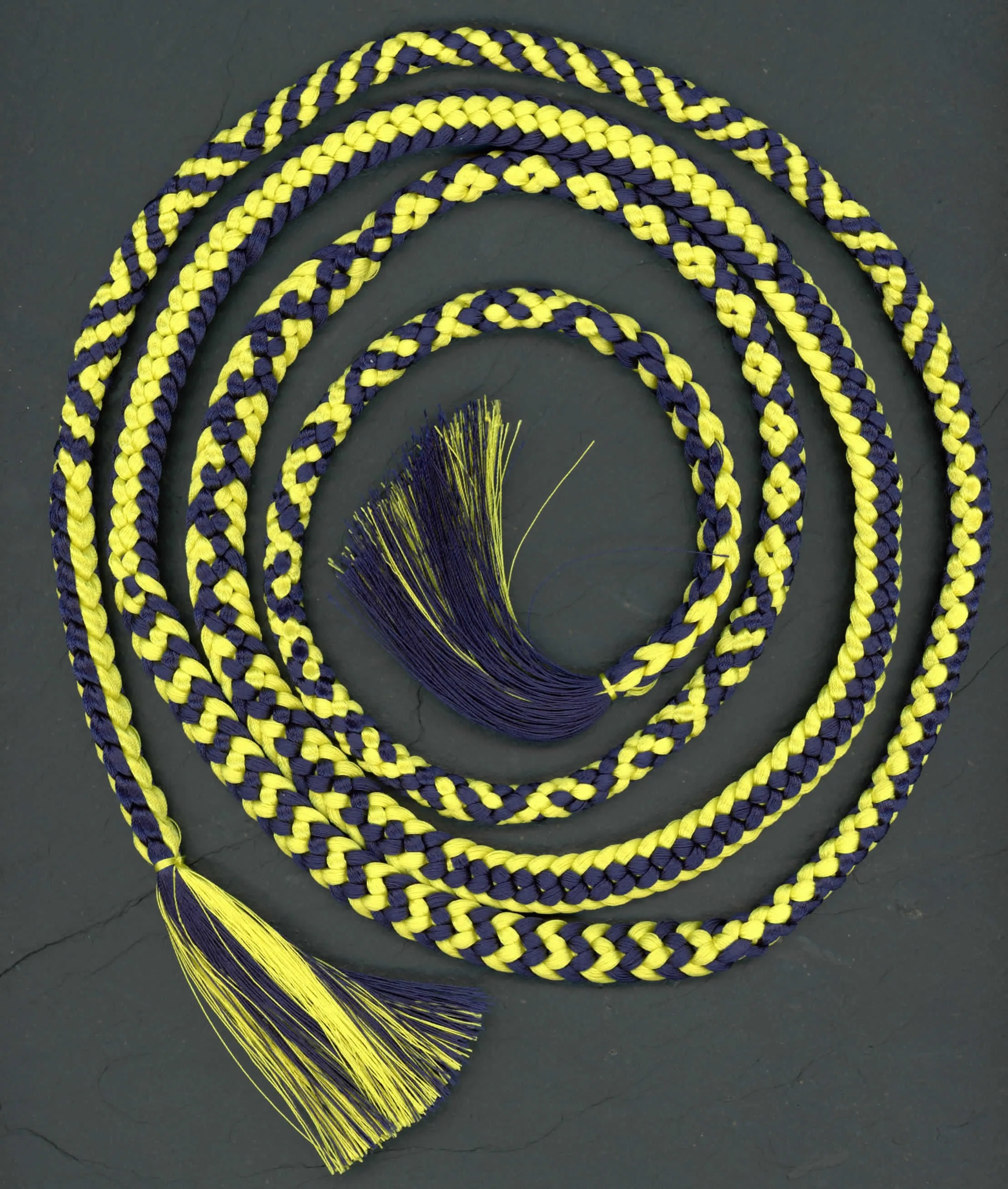
This workshop explores a series of different 16-tama braid structures. The workshop is designed for participants familiar with 8-element braid structures who wish to expand their repertoire into 16-tama structures. The braid structures in the study include Kongō Gumi, Naiki, Oimatsu, Tsukushi, Mitake Gumi, Shinonome, Hira Genji, Ishidatami, Chidori, and Sasanami.

Learn how the placement of color on the Marudai changes the design within the same Kumihimo braid structure. Braids in this study include Yotsu Gumi, Maru Genji, Edo Yatsu Gumi (with its variations of repeating steps two and three times), and Hira Kara Gumi.


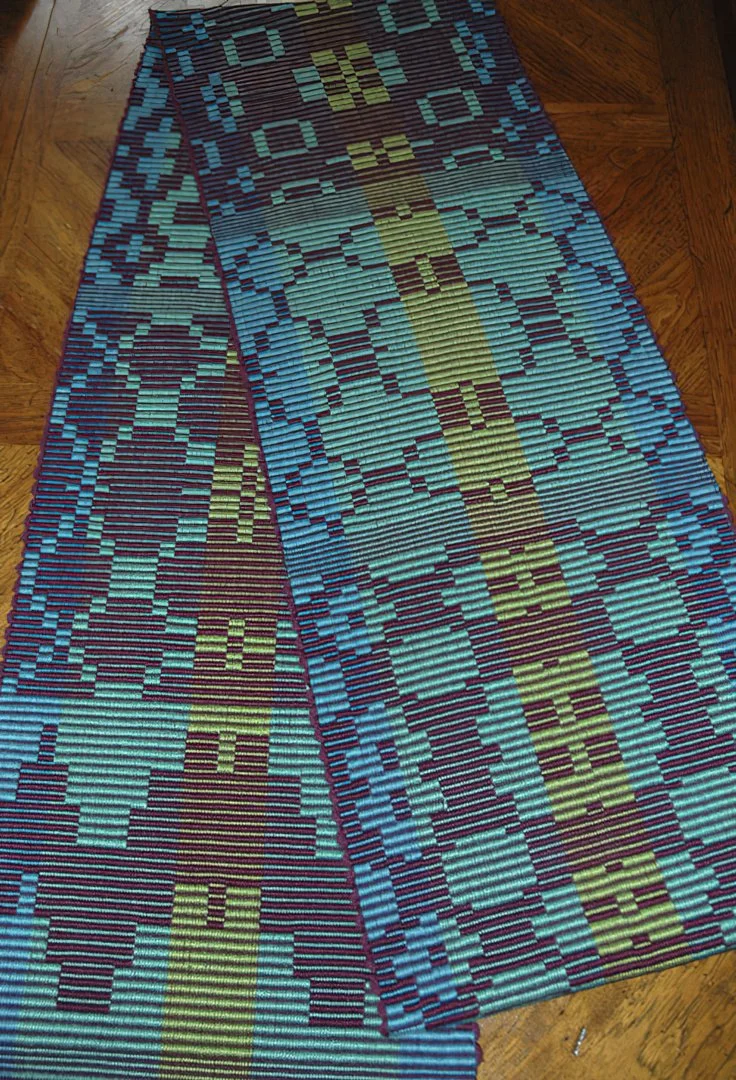



The runner will feature a series of 4-block motifs in the center, with a border featuring 2-block motifs in opposite colors. Weavers will choose their motifs from the Design Pages of Neilson’s book An Exaltation of Blocks.

My Journey with Rep started in 1979. I had been weaving for 10 years when I took a two-week workshop with Swedish weaving teacher Malin Selander at a local yarn store in McMinnville, Oregon. (Click on Photo to learn more.)

The rep runner will feature a series of 4-block motifs in the center, with a border featuring 2-block motifs in opposite colors. The border will be separated from the center designs by solid-color stripes. Weavers will use a series of Design Pages from An Exaltation of Blocks written by Rosalie Neilson to develop their 4-block motifs. (Click on Photo to learn more.)

Using a foam braiding disk and satin cord, practice making a variety of lattice structures, from regular (symmetric) to irregular (asymmetric) shapes. (Click on Photo to learn more).

What happens if the number of warp ends for a project doesn't fit neatly into the Fibonacci number sequence? Learn how a rep weaver discovered something she calls the Fibonacci Fudge Factor. (Click on Photo to learn more).